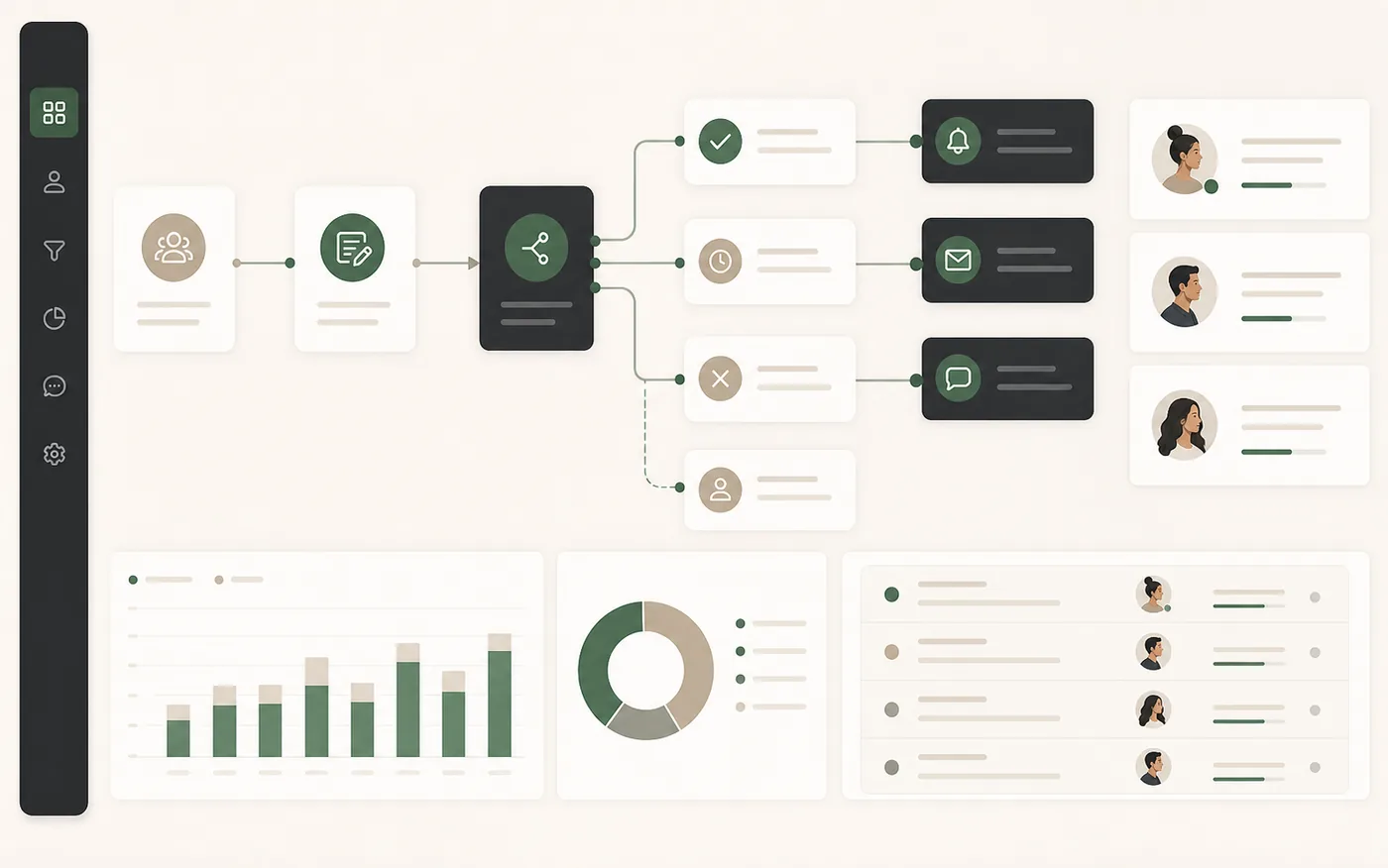
Ad leads and website inquiries enter a defined workflow.
Source, campaign, page and offer details should travel with the lead.

Workflow automation
Campaign performance often breaks after the form submission. WIF builds marketing workflows that preserve source context, assign ownership and keep follow-up visible.
Short answer
Automation should remove confusion from the handoff, not add another dashboard no one trusts.
Source, campaign, page and offer details should travel with the lead.
Sales teams need clear responsibility, reminders and status movement.
This gives marketing and sales a shared view of what is actually happening.
Workflow build
The workflow is built around what sales needs to know and do next.
 Automation proof
Cleaner handoff
Automation proof
Cleaner handoff
Related proof
This supports paid media, SEO pages and AI calling agents by keeping leads connected to action.
FAQ
WIF starts with the current funnel: channel setup, page clarity, tracking, lead quality and follow-up. The output is a practical plan before heavier scaling.
WIF reviews useful signals such as qualified leads, conversion quality, source context, sales feedback and revenue movement instead of relying only on impressions or clicks.
Yes. The operating model stays similar, but market language, targeting, proof, budget and follow-up rules are adjusted for the buyer and location.
Free growth audit